CarOut
CarOut
Project completed during studies at SWPS University
More and more cities are opting to abandon cars or increase the percentage of people giving up cars on a daily basis. The widespread availability of bicycles/scooters and public transportation does not outweigh the persistent desire to use personal vehicles. Conducted studies prove that changing drivers’ behavior is challenging, even if free transportation is introduced.
City of Poznan has undertaken the implementation of this plan – CarOut app was created to facilitate achieving this goal.
in-depth interviews
In the initial phase, we asked ourselves numerous questions, which were then verified through in-depth interviews with individuals meeting the specified criteria:
– employment in various industries, both on-site and remotely
– individuals above 25 years old
– having a family or being single
– commuting by car and residing in the center of Poznan
– commuting by car and residing in the outskirts of Poznan
problems and needs
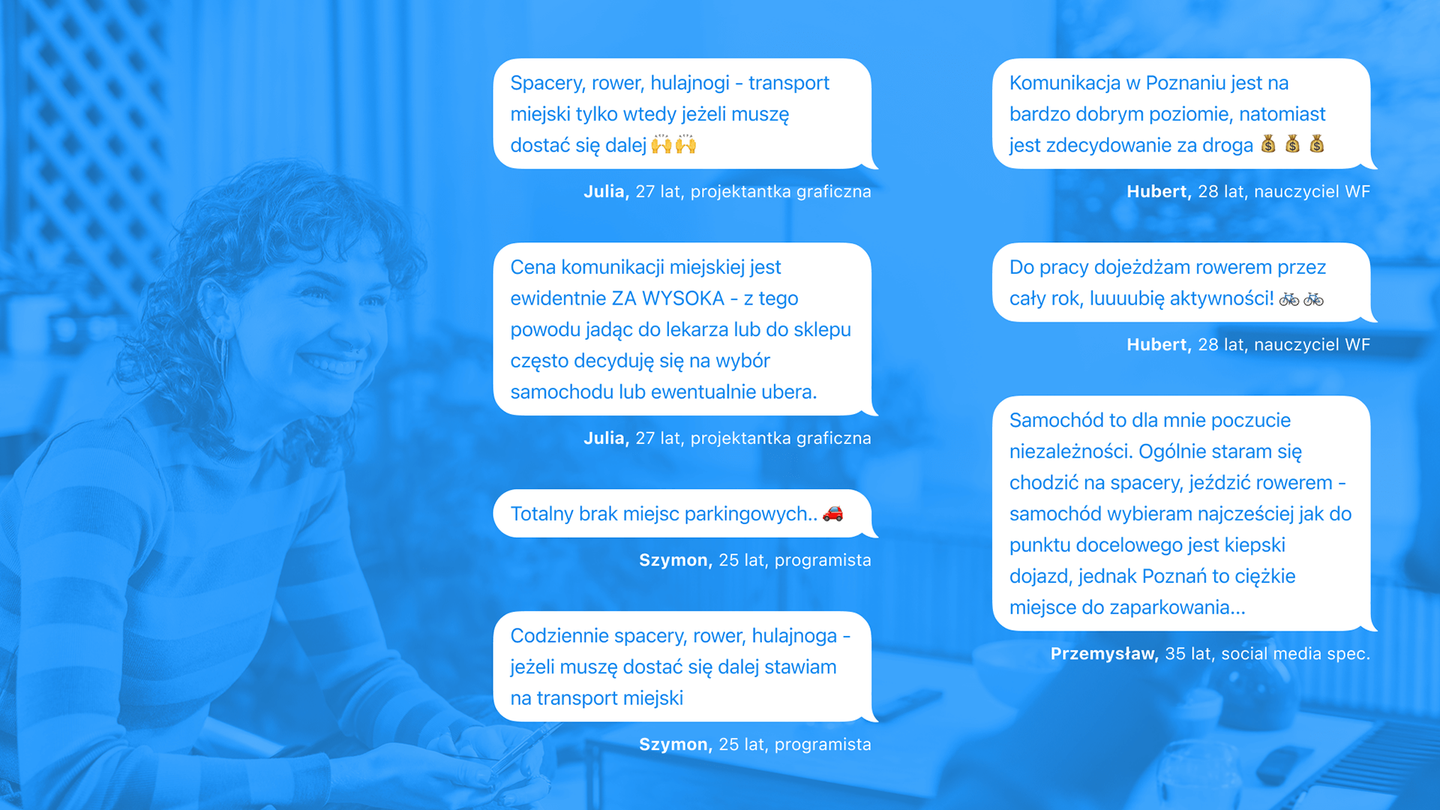
The conducted In-Depth Interviews (IDI) allowed us to identify the major issues described by the participants:
– limited availability and high cost of parking in downtown Poznan
– poor connectivity of certain suburban areas with the city center
– high ticket prices
– significance of time gained when traveling by car
– lack of alternatives to cars
Respondents’ needs:
– convenience and comfort for individuals with children
– time savings
desk research
During the desk research, we aimed to understand the main objectives of the city and determine the direction of development. Reviewing the City of Poznań Development Strategy 2020+, we were intrigued by the priorities and investment directions until 2030, including:
– green, mobile city – enhancing the attractiveness and efficiency of public transportation and utilizing Poznan’s transport capabilities
– traffic calming in the city and the development of eco-mobility
We were particularly interested in a task outlined for implementation within the priority between 2020, 2025, and 2030 – the construction of the Park&Ride parking system.
benchmarking
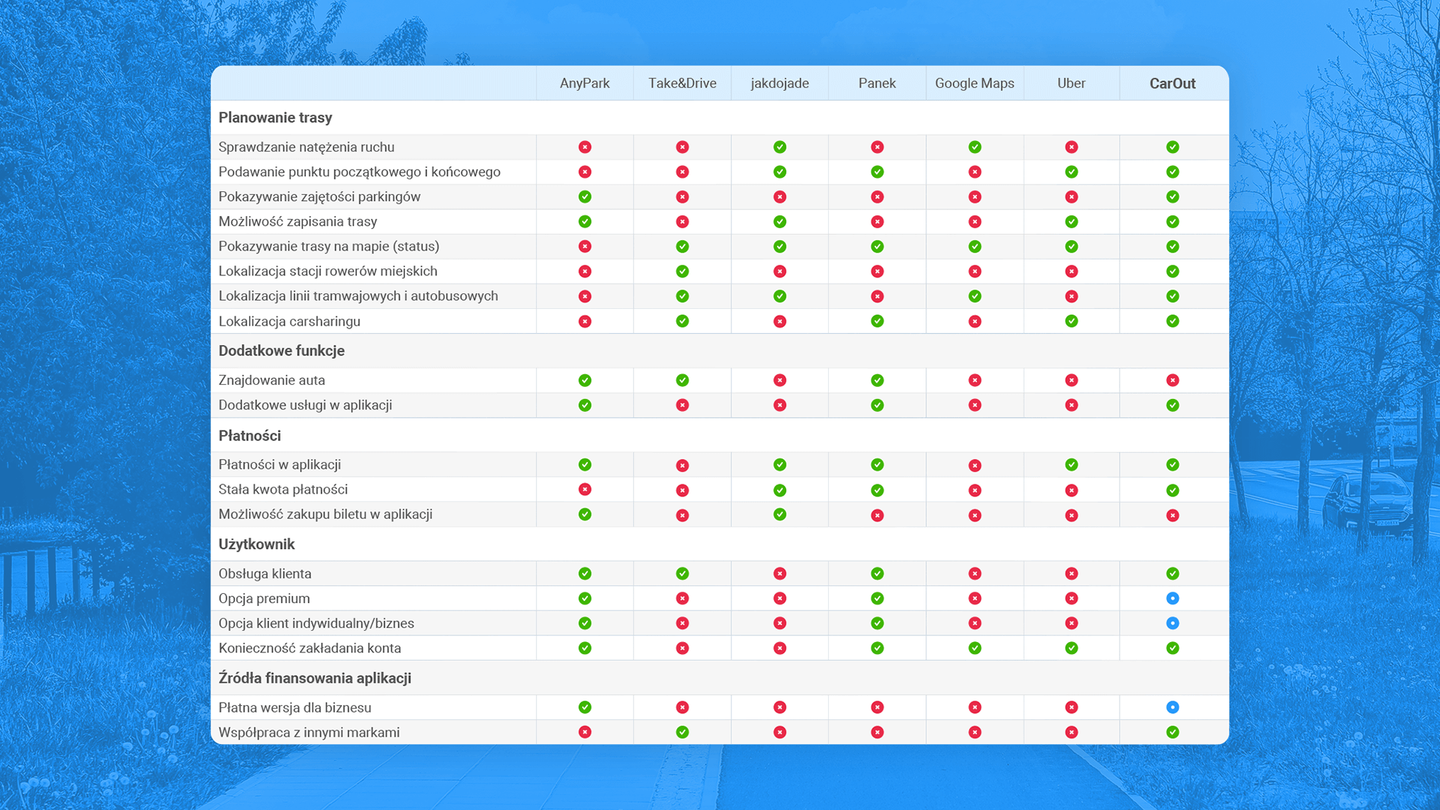
In the market, there are numerous applications available for planning transportation journeys and purchasing tickets. Therefore, the next stage of the “CarOut” project involved conducting an analysis of such applications. This allowed us to tailor existing solutions to our needs.
We conducted benchmarking – meticulously analyzing the functionalities of six applications on the market and comparing them with CarOut. This helped us identify functionalities that users expect and need. The main distinguishing feature of CarOut is the ability to specify the number of available spaces in Park&Ride and directly purchase a parking ticket.
customer journey and user flow
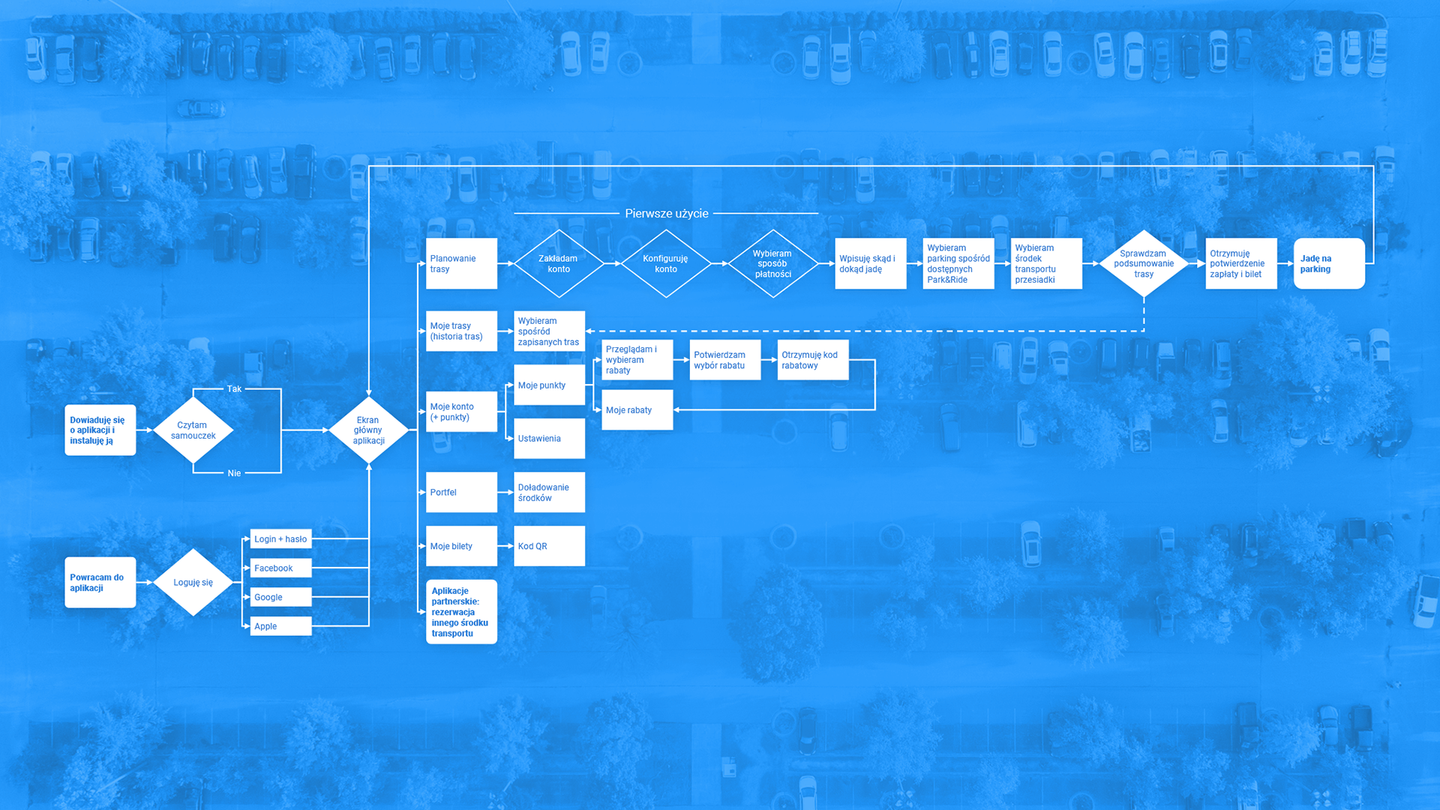
To precisely understand how users would interact with the CarOut application, we initially used a customer journey map. It helped us determine the main user path in the application and understand what motivates them to use it.
After conducting tests with users and making changes to the service based on the results, at a later stage, we decided to utilize User Flow. This allowed us to quickly establish various paths that CarOut users would need to follow, such as purchasing a parking ticket, exchanging points for discounts, or going through the registration process. User Flow significantly aided us in planning specific screens in the application.
RITE testing
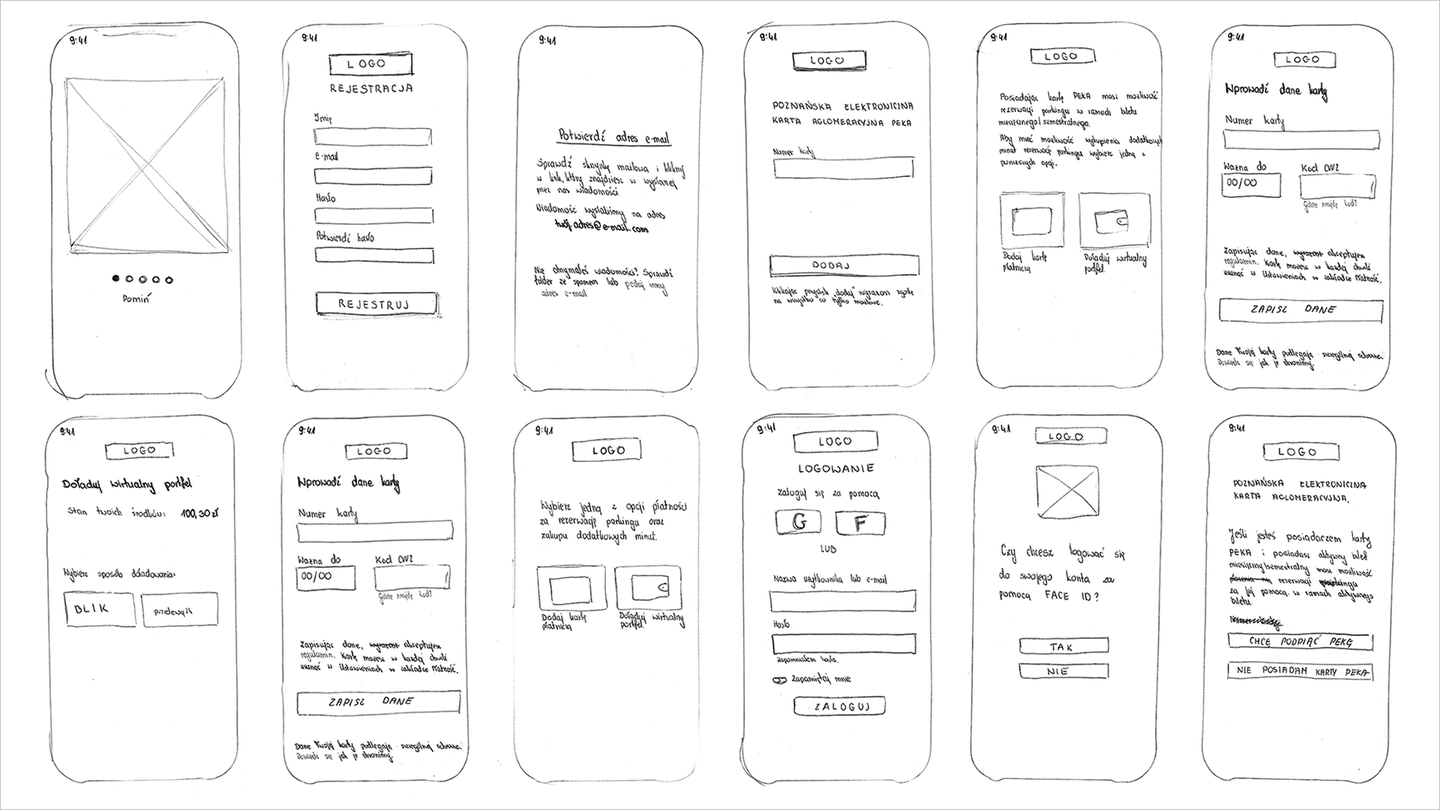
During the creation of the User Flow, we also began sketching screens and testing solutions using the RITE method.
In the initial stage of CarOut, it involved the possibility of directly reserving parking spaces – this required a double payment method, posing a significant issue for users. In the subsequent stage of changes, we attempted to simplify this function, but it did not alleviate the problem. Ultimately, we decided to abandon the reservation feature for Park&Ride spaces – in its place, we implemented a refined travel path that guided the user through the journey stages to their destination.
main screen
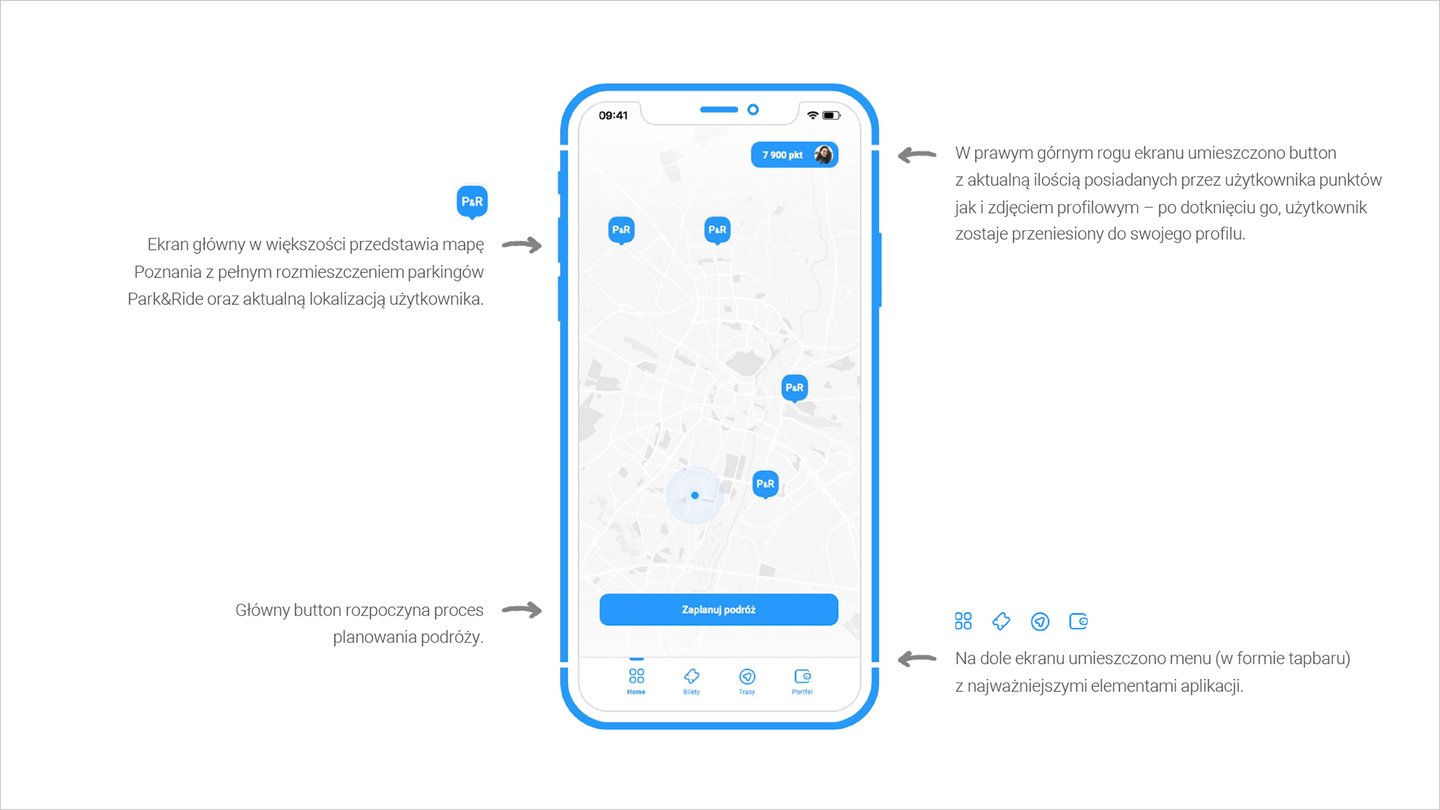
Main screen of the application features an interactive map of Poznan with the user’s location marked and Park&Ride parking lots indicated.
A large button at the bottom of the screen allows direct access to route planning. The bottom menu provides access to the most important functions of the application.
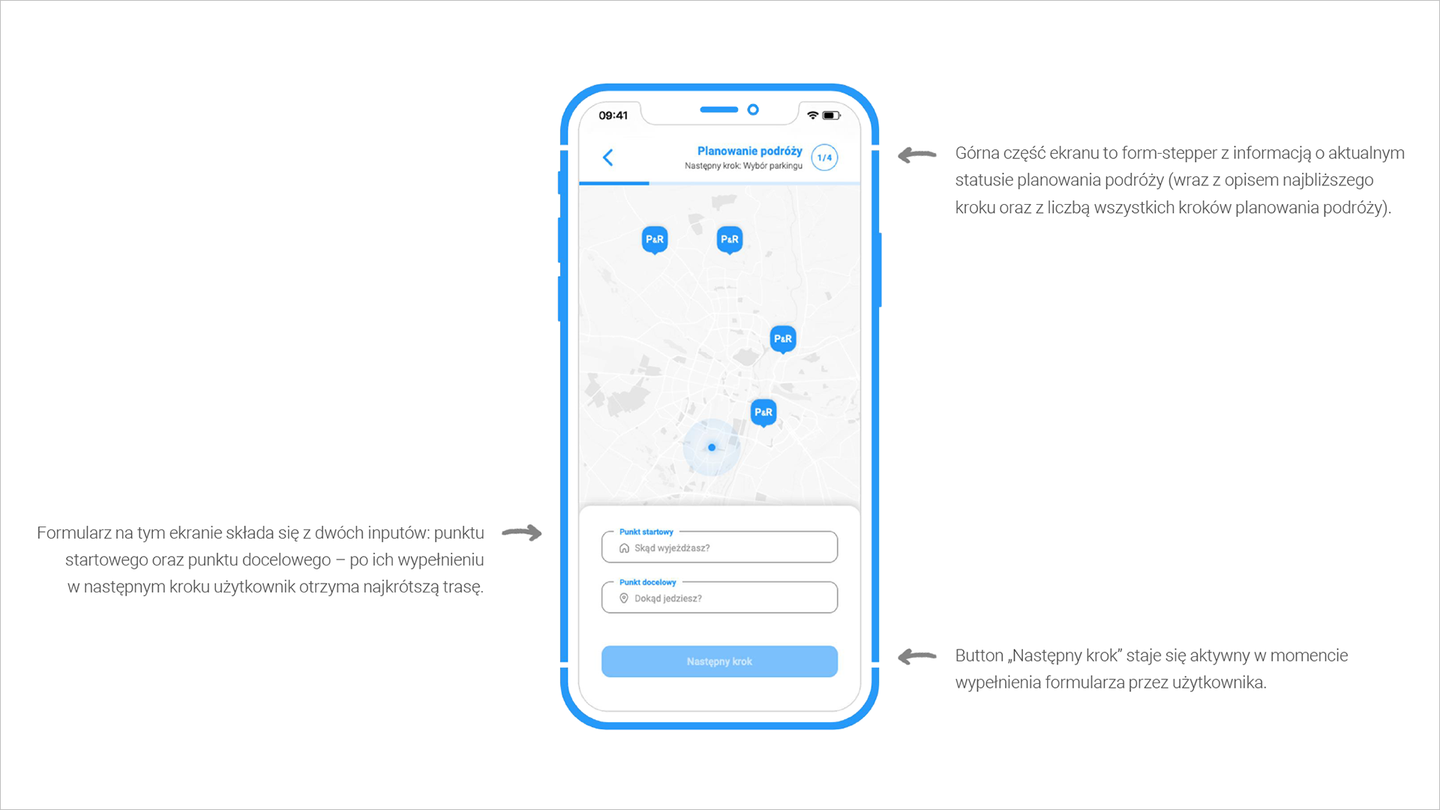
step 1/4 of trip planning
This screen marks the beginning of the trip planning process – in this step, the user selects the starting and destination points of their journey.
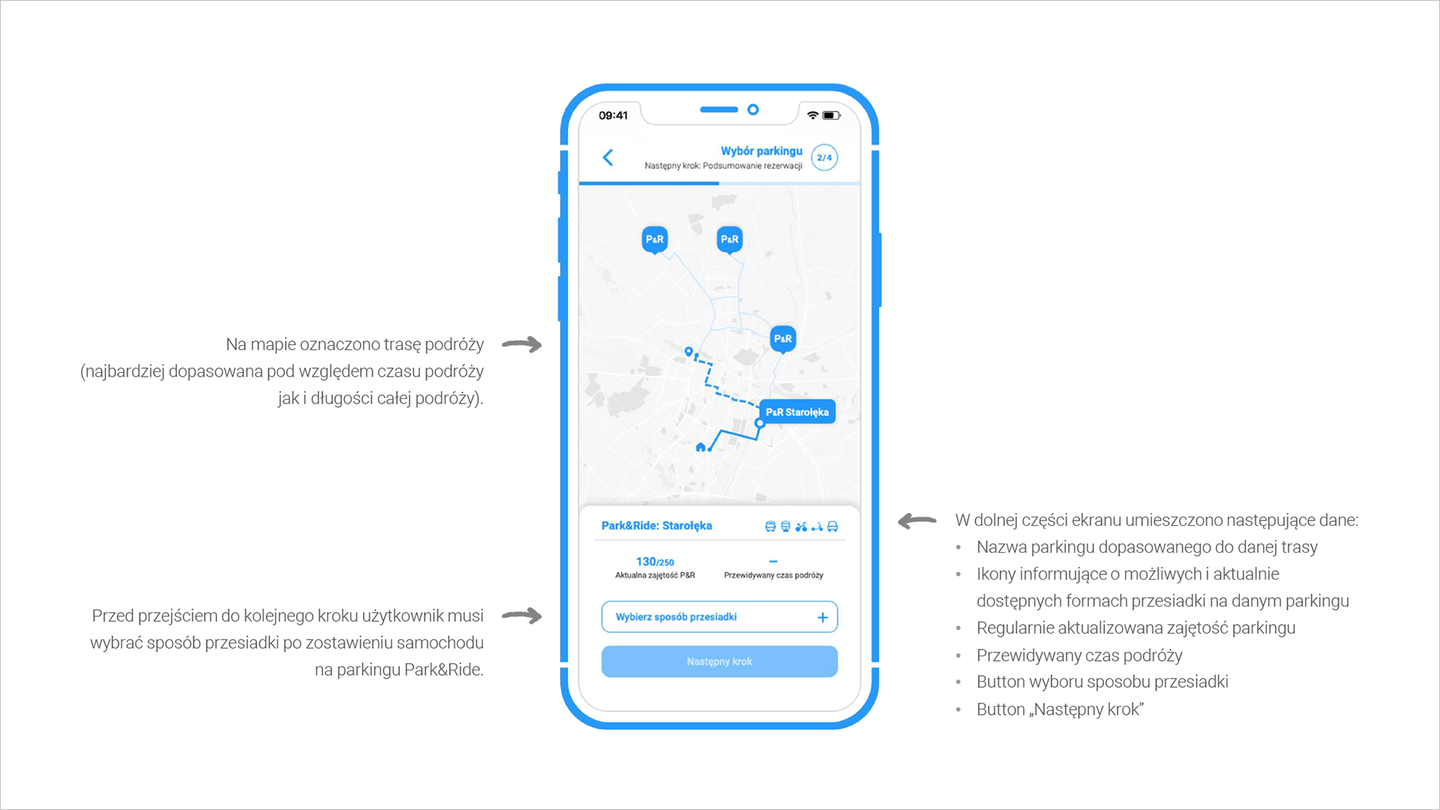
step 2/4 of trip planning
The application displays proposed routes from the starting point to the destination through an intermediate point – the Park&Ride parking lot. The user selects the most appealing route and transfer option.
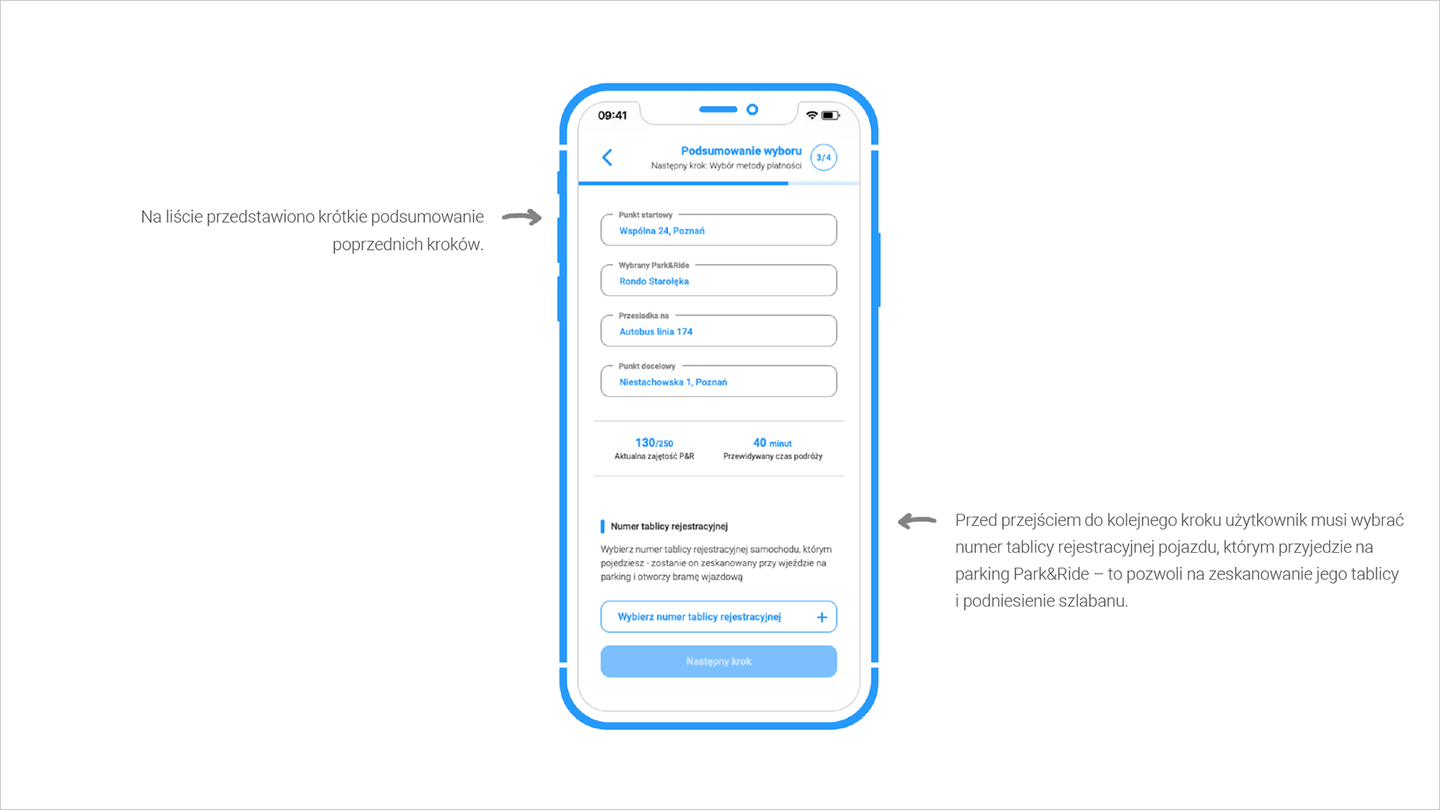
step 3/4 of trip planning
The user reviews a summary of the previous steps.
At the bottom (before proceeding), the application requires the user to enter the license plate number of their vehicle (or choose from a list of saved ones), which will be essential when using the Park&Ride parking.
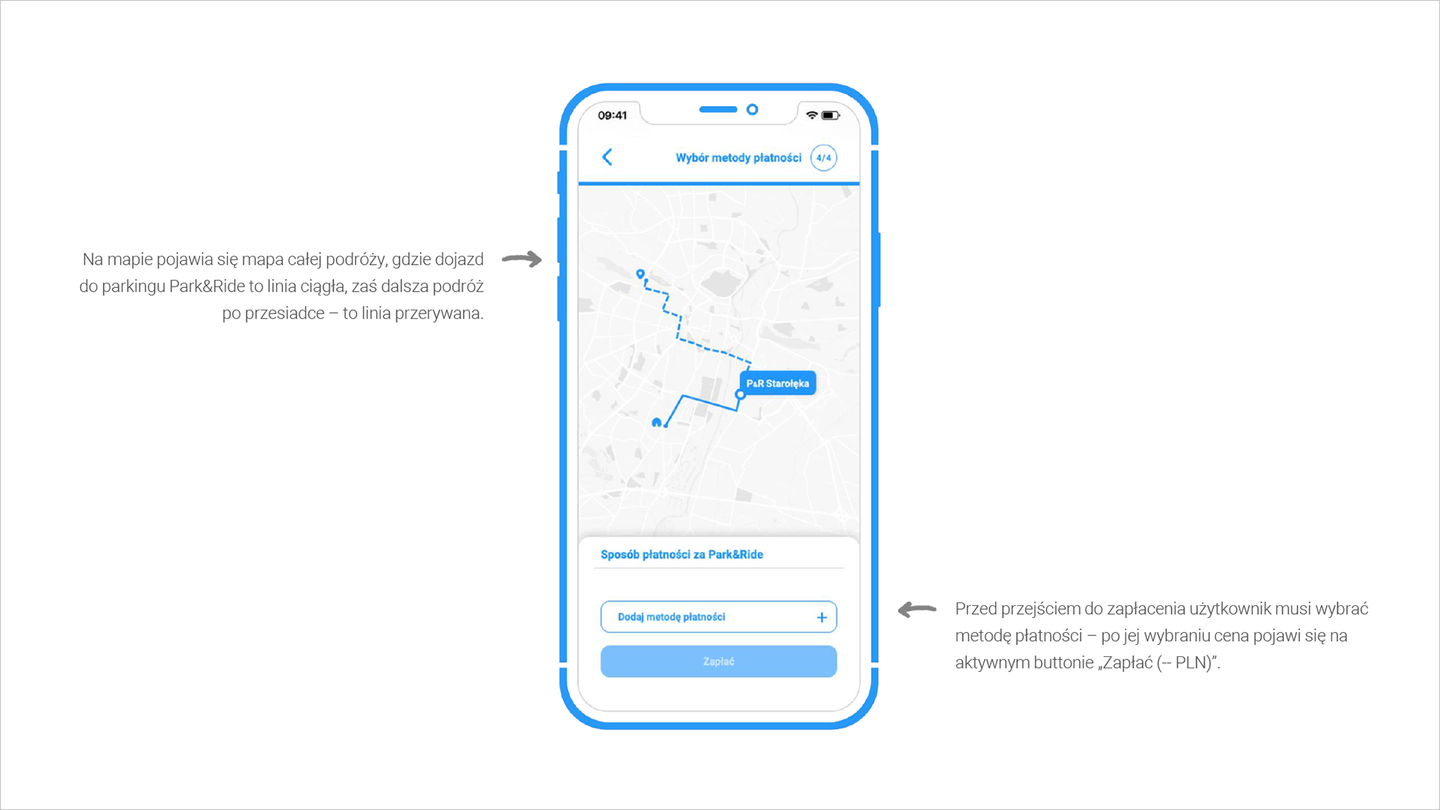
step 4/4 of trip planning
In the final stage, the user gains access to a preview of their route.
This screen represents the last step – payment.
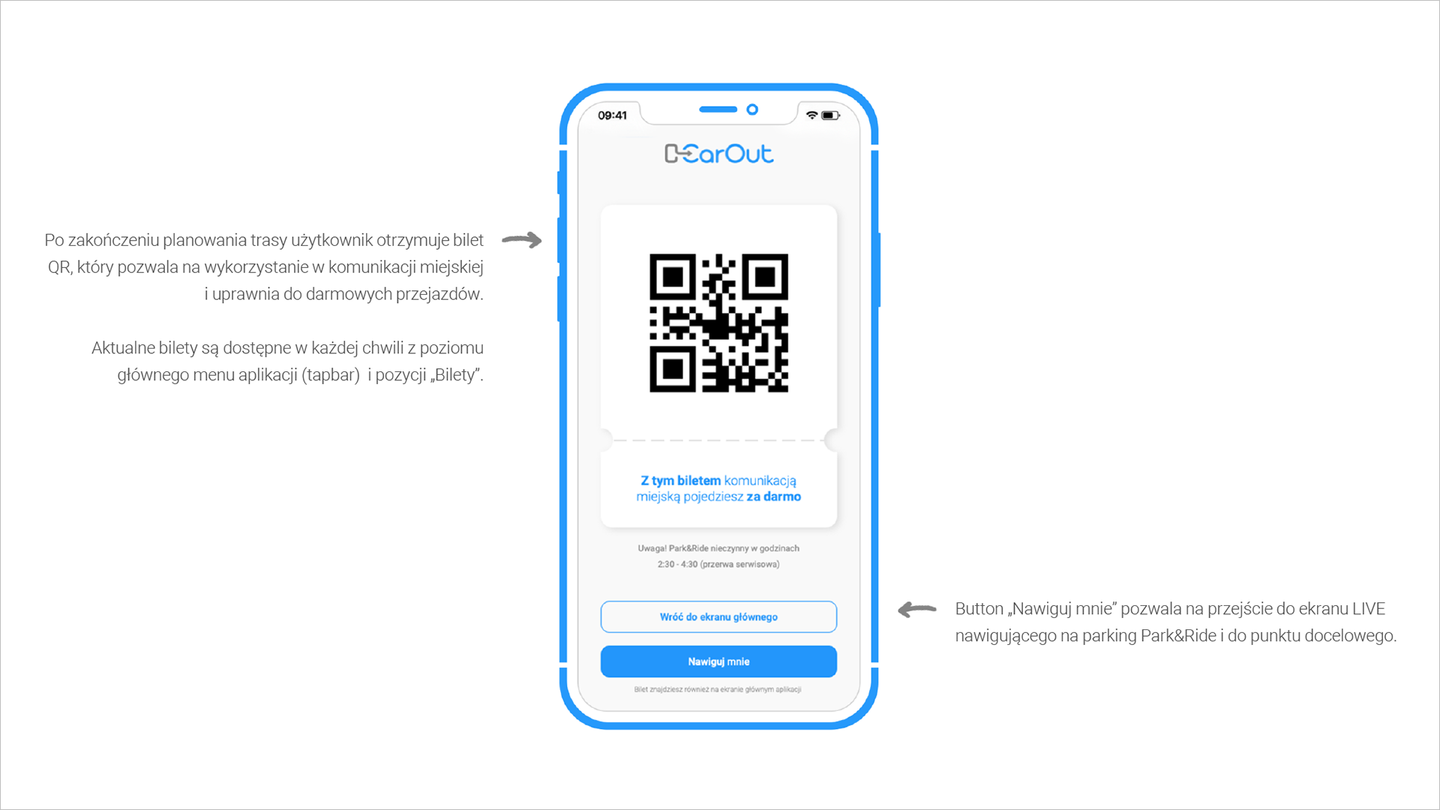
qr ticket
After completing the trip planning process, the user receives a QR ticket entitling them to free rides on public transportation.
The bottom part of the screen features a navigation button – activating it starts navigation directing the user to the destination.